
Feeding the Injured Horse: Feeding Your Horse to Safely Support Recovery and Box Rest
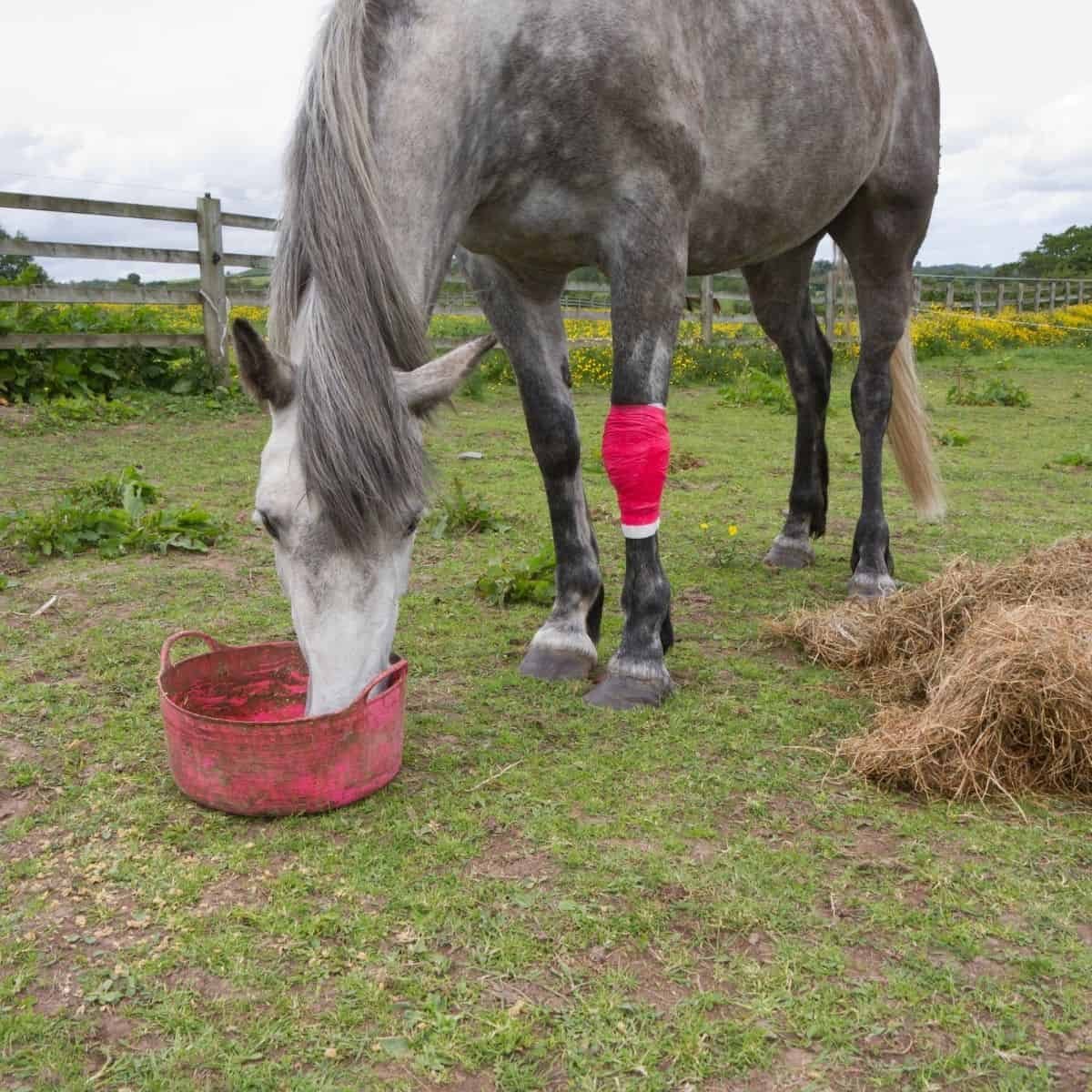
Changes in our horses’ lifestyle (e.g., increased/decreased activity, sudden box rest) prompt metabolic and digestive adjustments that require nutritional adaptation.
When a horse suffers an injury, veterinary treatment and rehabilitation often become the primary focus. However, nutrition is equally important, as tissue healing is an energy-dependent biological process that requires an adequate supply of nutrients.
Feed chemistry is not static, it must change with the horse’s physiology and workload.
Why does nutrition need to change?
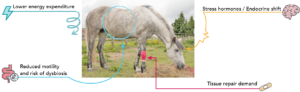
Recovery is an active biological process. Healing damaged muscles, tendons, ligaments, skin, or bone requires energy, amino acids, vitamins, and minerals. At the same time, reduced physical activity changes the way the horse utilises nutrients, while pain, stress, and confinement may affect intestinal motility and digestive function (Raidal et al., 2025; Williams et al., 2015).
This means that the diet which supported an athletic horse in work may no longer be appropriate during rehabilitation. Instead, nutrition should be adapted to match the horse’s current physiology and promote healing.
Fibre: the cornerstone of recovery
One of the most important nutritional priorities during rehabilitation is maintaining digestive health.
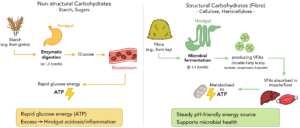
Unlike humans, horses are hindgut fermenters. The microorganisms living within the caecum and large colon ferment structural carbohydrates, such as those found in forage, producing volatile fatty acids (VFAs). These VFAs provide a slow and steady source of energy and can contribute up to 70% of the horse’s maintenance energy requirements while also supporting the health of the hindgut microbial population (Merritt and Julliand, 2013; de Fombelle et al., 2003; Costa etal., 2015).
Maintaining an adequate intake of forage during box rest therefore helps to:
- support normal hindgut fermentation;
- maintain intestinal motility;
- provide a consistent source of energy;
- reduce the risk of digestive disturbances;
- promote behavioural wellbeing by allowing the horse to express its natural foraging behaviour.
Depending on the individual horse and veterinary recommendations, feeds such as hay, soaked hay, beet pulp, and alfalfa (lucerne) can all contribute valuable sources of highly digestible fibre.
Why avoiding starch and cereals is often a better choice
Performance horses frequently receive cereal-based feeds to provide readily available energy for exercise. During rehabilitation, however, those energy requirements are substantially reduced.
Large amounts of starch that escape enzymatic digestion in the small intestine pass into the hindgut, where they undergo rapid fermentation. This lowers hindgut pH, disrupts beneficial microbial populations, and may contribute to hindgut acidosis, colic, and other digestive disturbances (Colombino et al., 2022; Tuniyazi et al., 2021; Hillyer et al., 2002; Hudson et al., 2001).
High-starch and high-sugar diets may also promote repeated spikes in blood glucose and insulin concentrations, increasing the risk of obesity, insulin dysregulation, and laminitis in susceptible horses (Carter et al., 2009; Morgan et al., 2016; Nilsson et al., 2025).
For many horses recovering from injury, replacing part of the cereal ration with fibre-based feeds and, where appropriate, oil-based energy sources provides a more suitable nutritional strategy.
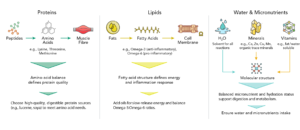
Protein: Supporting tissue repair
Although overall calorie requirements often decrease during box rest, the need for high-quality protein remains essential.
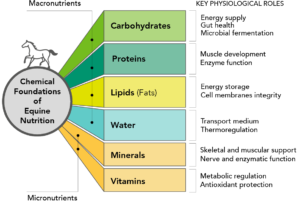
Proteins are broken down into amino acids, which provide the building blocks needed to repair muscles, tendons, ligaments, connective tissues, enzymes, and many other body structures. However, not all protein sources are equal. Their nutritional value depends not only on the amount of protein they contain, but also on their digestibility and amino acid profile (Bockisch et al., 2023).
Essential amino acids such as lysine, methionine, and threonine play a particularly important role during recovery, when tissues are actively repairing and remodelling. High-quality protein sources, including lucerne and soybean meal, can therefore help support the healing process (Bockisch et al., 2023).
Healthy fats and essential micronutrients
Dietary fats provide a concentrated source of slow-release energy without disrupting hindgut fermentation. They are particularly useful when additional calories are needed without increasing starch intake. Omega-3 fatty acids have also been shown to influence inflammatory pathways and support normal cellular function, making them valuable components of many rehabilitation diets (Nogradi et al., 2015).
Vitamins and minerals, although required in much smaller quantities, are equally important. Vitamin E and selenium help protect cells against oxidative stress, while zinc and copper contribute to collagen formation and connective tissue repair. Maintaining adequate hydration and electrolyte balance also supports digestive function and normal physiological processes during recovery (Bockisch et al., 2023; Nogradi et al., 2015).
Common feeding mistakes during box rest
Rehabilitation diets should be carefully planned to avoid common mistakes, including:
- continuing the same competition ration despite reduced exercise;
- feeding excessive amounts of cereals or sugary treats;
- restricting forage too severely in an attempt to prevent weight gain;
- making sudden dietary changes;
- overlooking vitamin and mineral intake when concentrate feeds are reduced.
Every horse is different, and nutritional management should always consider the horse’s age, body condition, medical history, type of injury, and expected duration of rehabilitation.
Nutrition and Physiotherapy working in tandem
Successful rehabilitation involves much more than simply resting an injury.
Physiotherapy provides the controlled mechanical stimulus needed to restore movement, improve strength, and encourage appropriate tissue adaptation. Nutrition supplies the energy and nutrients required for those tissues to repair and respond to treatment.
Rather than working independently, veterinary care, physiotherapy, exercise management, and nutrition should all be considered complementary components of a successful rehabilitation programme. Always, always, always check with your Vet or your Equine Nutritionist before making any changes to your horse’s diet.
Key takeaways – Feed to heal, not just to fill.
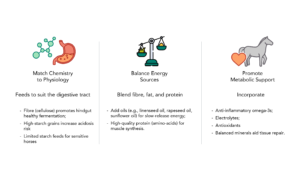
Injury changes far more than a horse’s workload – it changes the whole body’s physiology.
Although energy requirements usually decrease during box rest, the demand for nutrients that support tissue repair, digestive health, and normal metabolism remains high. Prioritising fibre, providing high-quality protein, balancing vitamins and minerals, and avoiding excessive starch can all help create the best nutritional environment for healing.
By adapting the diet to the horse’s changing physiological needs, you can support your horse throughout recovery, minimise the risk of secondary complications, and help prepare your horse for a safe return to work.
_____________________________________________________________________________________________________________
REFERENCES
Bockisch, F., Taubert, J., Coenen, M. and Vervuert, I. (2023). Protein evaluation of feedstuffs for horses. Animals, 13(16), 2624.
Carter, R.A., Treiber, K.H., Geor, R.J., Douglass, L. and Harris, P.A. (2009). Prediction of incipient pasture-associated laminitis from hyperinsulinaemia, hyperleptinaemia and generalised and localised obesity in a cohort of ponies. Equine Veterinary Journal, 41(2), pp.171–178.
Colombino, E., Raspa, F., Perotti, M., Bergero, D., Vervuert, I., Valle, E. and Capucchio, M.T. (2022). Gut health of horses: effects of high fibre vs high starch diet on histological and morphometrical parameters. BMC Veterinary Research, 18(1).
Costa, M.C., Silva, G., Ramos, R.V., Staempfli, H.R., Arroyo, L.G., Kim, P. and Weese, J.S. (2015). Characterization and comparison of the bacterial microbiota in different gastrointestinal tract compartments in horses. The Veterinary Journal, 205(1), pp.74–80.
de Fombelle, A., Varloud, M., Goachet, A.G., Jacotot, E., Philippeau, C., Drogoul, C. and Julliand, V. (2003). Characterization of the microbial and biochemical profile of the different segments of the digestive tract in horses given two distinct diets. Animal Science, 77(2), pp.293–304.
Hillyer, M.H., Taylor, F.G.R., Proudman, C.J., Edwards, G.B., Smith, J.E. and French, N.P. (2002). Case control study to identify risk factors for simple colonic obstruction and distension colic in horses. Equine Veterinary Journal, 34(5), pp.455–463.
Hudson, J.M., Cohen, N.D., Gibbs, P.G. and Thompson, J.A. (2001). Feeding practices associated with colic in horses. Journal of the American Veterinary Medical Association, 219(10), pp.1419–1425.
Merritt, A.M. and Julliand, V. (2013). Gastrointestinal physiology. In: R.J. Geor, P.A. Harris and M. Coenen, eds. Equine Applied and Clinical Nutrition. Saunders Elsevier, pp.3–32.
Morgan, R.A., Keen, J.A. and McGowan, C.M. (2016). Treatment of equine metabolic syndrome: A clinical case series. Equine Veterinary Journal, 48(4), pp.422–426.
Nilsson, E., Moazzami, A.A., Lindberg, J.E. and Jansson, A. (2025). The metabolomic profile of a high starch versus no starch diet in athletic horses. Scientific Reports, 15(1).
Nogradi, N., Couetil, L.L., Messick, J., Stochelski, M.A. and Burgess, J.R. (2015). Omega-3 fatty acid supplementation provides an additional benefit to a low-dust diet in the management of horses with chronic lower airway inflammatory disease. Journal of Veterinary Internal Medicine, 29(1), pp.299–306.
NRC (2007). Nutrient Requirements of Horses. 6th revised edition. Washington, DC: National Academies Press.
Raidal, S.L., Freccero, F., Carstens, A., Weaver, S. and Padalino, B. (2025). Road transportation is associated with decreased intestinal motility in horses. Frontiers in Veterinary Science, 12, 1647236.
Tuniyazi, M., He, J., Guo, J., Li, S., Zhang, N., Hu, X. and Fu, Y. (2021). Changes of microbial and metabolome of the equine hindgut during oligofructose-induced laminitis. BMC Veterinary Research, 17(1).
Williams, S., Horner, J., Orton, E., Green, M., McMullen, S., Mobasheri, A. and Freeman, S.L. (2015). Water intake, faecal output and intestinal motility in horses moved from pasture to a stabled management regime with controlled exercise. Equine Veterinary Journal, 47(1), pp.96–100.